
New worries that tsunami detritus might bring aquatic invasives to U.S. shores

June 14, 2012

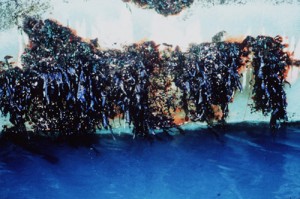
Undaria pinnatifida, also known as wakame, is an invasive seaweed native to Japan. Not previously found in Oregon, it was recently identified there on tsunami debris. Photo credit: Cameron Hay, ISSG.

When a floating dock the size of a boxcar washed up on a sandy beach in Oregon, beachcombers got excited because it was the largest piece of debris from last year’s tsunami in Japan to show up on the West Coast.

But scientists worried it represented a whole new way for invasive species of seaweed, crabs and other marine organisms to break the earth’s natural barriers and further muck up the West Coast’s marine environments. And more invasive species could be hitching rides on tsunami debris expected to arrive in the weeks and months to come.

“We know extinctions occur with invasions,” said John Chapman, assistant professor of fisheries and invasive species specialist at Oregon State University’s Hatfield Marine Science Center. “This is like arrows shot into the dark. Some of them could hit a mark.”

Though the global economy has accelerated the process in recent decades by the sheer volume of ships, most from Asia, entering West Coast ports, the marine invasion has been in full swing since 1869, when the transcontinental railroad brought the first shipment of East Coast oysters packed in seaweed and mud to San Francisco, said Andrew Cohen, director of the Center for Research on Aquatic Bioinvasions in Richmond, Calif. For nearly a century before then, ships sailing up the coast carried barnacles and seaweeds.”

Read the full article at JSOnline.

Read more at Sci-tech Today.

Read more about Ungaria pinnatifida at the International Invasive Species Database.

    Leave a Comment

    Land

    GarlicMustard1

    Blue Plate Special: Garlic Mustard

    It’s spring, and garlic mustard is sprouting up all over the East. Time to get out the food processor and pesto the invader.   Alliaria petiolata Native range: Europe, Asia, Northwest Africa Invasive range: Much of the Lower 48, Alaska, and Canada. (See map.) Habitat: Moist, shaded soil of floodplains, forests, roadsides, edges of woods, [...]


      EAT ME!
      burdoc87-l

      Burdock

      Native to the Old World, burdock’s introduction to North America was noted in 1672 by John Josselyn, a sharp-eyed English visitor, who used Gerard’s Herbal: The Historie of Plants of 1597 as a field guide. . . .


        EAT ME!
        Purslane close-up

        Purslane

        George Washington ate weeds. That is, he ate what he thought of as garden vegetables: Martha’s Booke of Cookery and Book of Sweetmeats, includes a handwritten recipe for Pickled Purslane. The manuscript . . .


          EAT ME!
          685px-Fallopia_japonica flower detail

          Japanese Knotweed

          It’s the 1880s. Frederick Law Olmstead, who, in his thirties, co-designed a little patch of ground in New York called Central Park, in his forties sells Boston on the Emerald Necklace, a whole new…


            EAT ME!
            Chopped dock whorls ready to be sauteed.

            Curly Dock

            Stare out across the empty lots and fields on the outskirts of Denver, Colorado, and you will see scattered clumps of dark green leaves towering above the grass. In spring the…


              EAT ME!

              Sea

              chuka wakame

              Wakame

                Undaria pinnatifida Native range: Japan Sea Invasive range: Southern California, San Francisco Bay, New Zealand, Australia, Europe, Argentina Habitat: Opportunistic seaweed, can be found on hard substrates including rocky reefs, pylons, buoys, boat hulls, and abalone and bivalve shells. Description: Golden brown seaweed, growing up to nine feet. Forms thick canopy. Reproductive sporophyll in [...]


                EAT ME!
                Hemigrapsus_sanguineus_big

                Asian Shore Crab

                The first sighting of the Asian shore crab in the United States was at Townsend Inlet, Cape May County, New Jersey, in 1988. Though the source is unknown . . .


                  EAT ME!
                  Periwinkles

                  Periwinkle

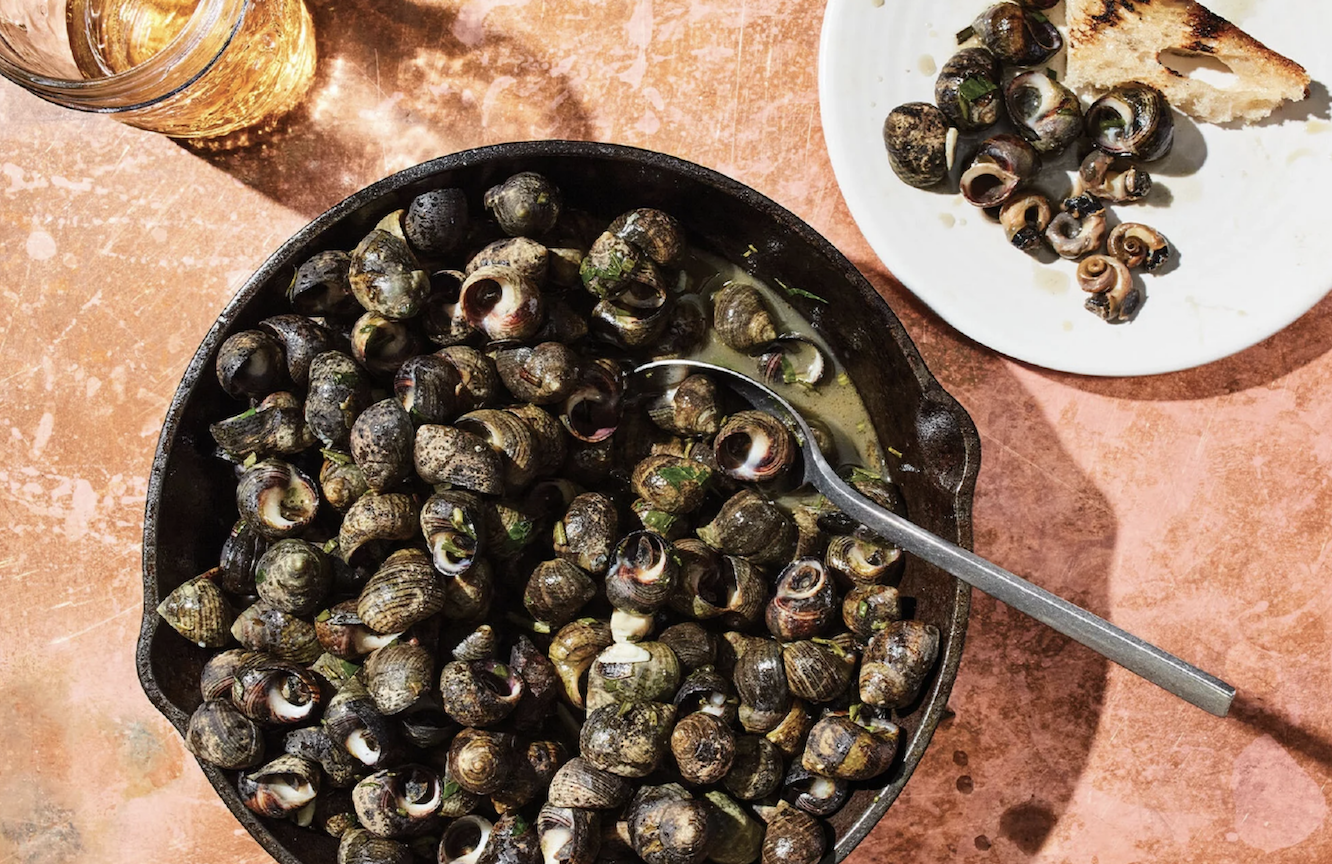
                  The common periwinkle, which first appeared in New England in the 1860s, is now found along the coast wherever there’s hard substrate–rocks, riprap, broken concrete, or docks–from Labrador to . . .


                    EAT ME!
                    Pterois volitans

                    Lionfish

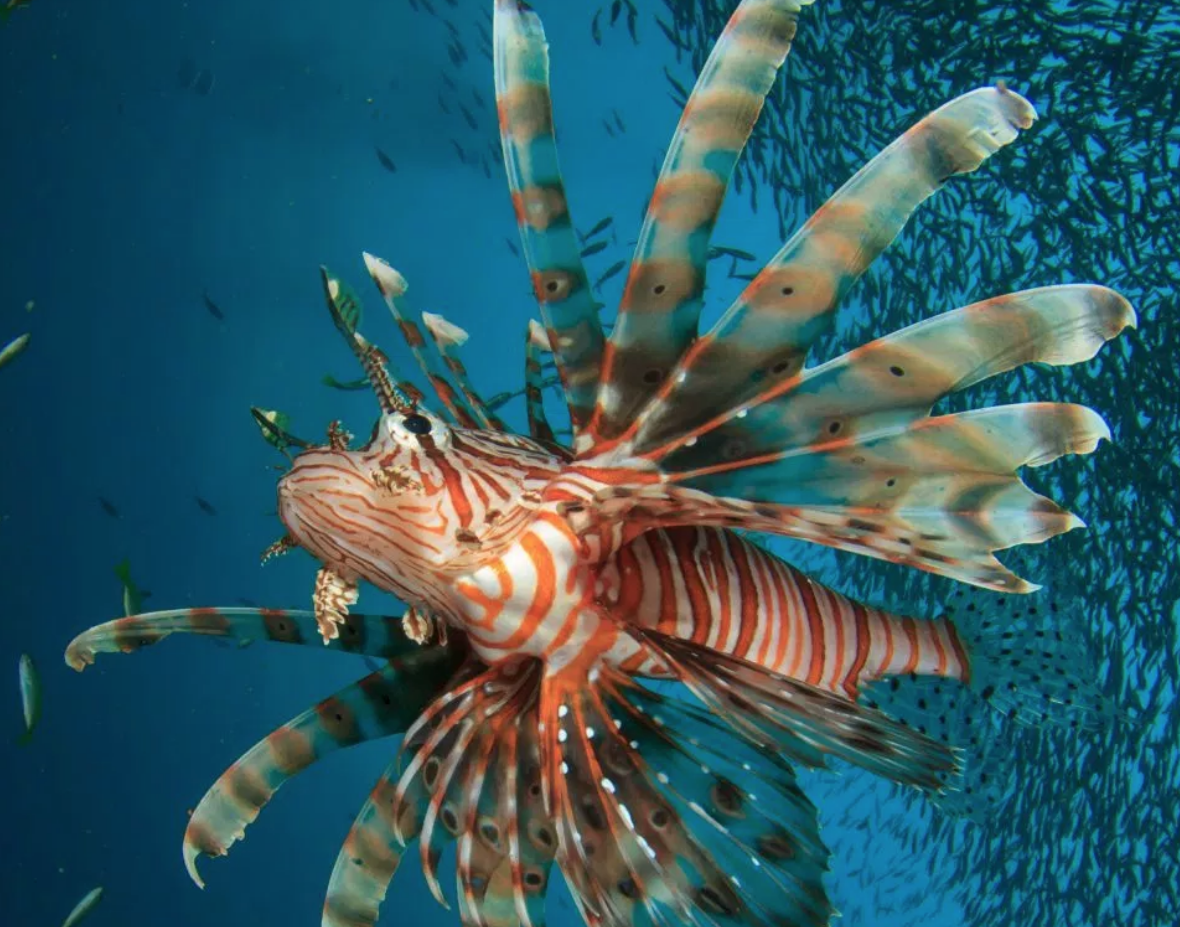
                    Some say it started in 1992 in Miami when Hurricane Andrew smashed an aquarium tank. Don’t blame the weather, others say; in the mid-nineties, disappointed yet softhearted hobbyists…


                      EAT ME!
                      Kleiner_Taschenkrebs_(Carcinus_maenas)

                      Green Crab

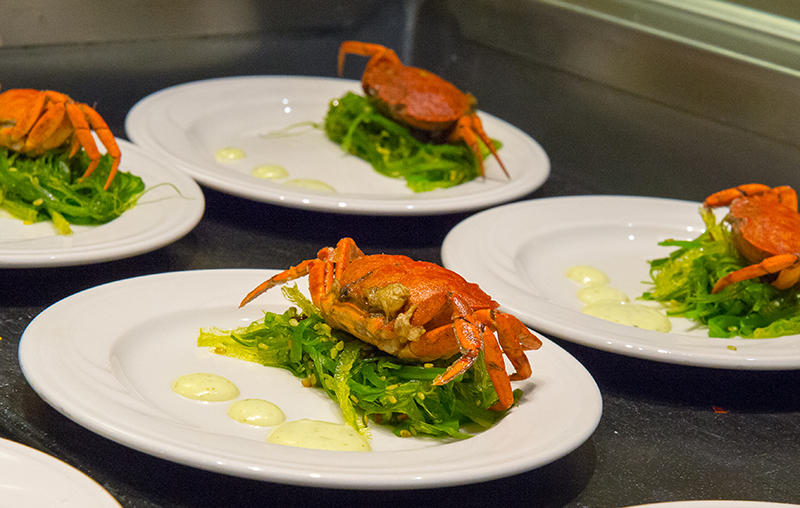
                      Since the green crab was first recorded off southern Massachusetts in 1817, it has been hard to ignore. A few minutes of rock-flipping in Maine can turn up dozens of them, brandishing their claws as they retreat…


                        EAT ME!

                        Fresh

                        bullfrog

                        Bullfrog

                        “They live in a wide variety of habitats, colonize new ones readily, and eat everything that fits into their mouths,” says Dr. Peter Moyle of the Center for Watershed Sciences at UC-Davis…


                          EAT ME!
                          Distinguishing _ Channa argus

                          Northern Snakehead

                          His sister was ailing, and the man in Maryland remembered that, back home in Hong Kong, there was a fish that was considered a delicacy and a restorative. He would make a fish soup…


                            EAT ME!
                            Picture 1

                            Common Carp

                            For a bottom-feeder, what is the good life? The common carp isn’t very demanding: any body of water that’s sluggish and murky will do. One catching sewage or…


                              EAT ME!
                              nutria-mugshot

                              Nutria

                              Nutria, also known as coypu and river rat, is native to temperate and subtropical South America. It has been introduced to Europe, Asia, and Africa, mainly for fur farming. These voracious. . .


                                EAT ME!
                                Bighead_carp

                                Asian Carp

                                They can swim up the Mississippi River. They can fly over a fishing boat, ten feet in the air, hitting fishermen with the force of a bowling ball. They won’t take bait from hook, and they’re bony––what’s to like…


                                  EAT ME!

                                  Field Notes

                                  fish slider

                                  Pathways to Invasion

                                  How do invasive species enter North America? We bring them in. Our ancestors.The early colonists, brought pigs, which they let range free, and seeds to plant as crops. Others just hitched a ride: on their shoes, in fodder, on animals, on boat hulls, and stowed among ballast cobbles. Our tax dollars at work. Since the [...]


                                    EAT ME!
                                    Wildlife-Feral Hog

                                    Malicious but Delicious

                                    What should we eat to save local ecosystems and the future of civilization? Frank Bruni discusses a recent event in Austin, Texas, that served up feral hogs, tiger prawns, and Himalayan blackberries, in the New York Times.


                                      EAT ME!
                                      OLYMPUS DIGITAL CAMERA

                                      New Requirements for Ballast Water

                                      In a good move for our coastlines, the Environmental Protection Agency has issued new guidelines on ballast water. Incoming ships must continue dumping their ballast 200 miles from the U.S. shoreline, but they also must treat ballast water with ultraviolet light or chemicals to reduce the risk of transporting new invaders to the coast. Many [...]


                                        EAT ME!
                                        cbc

                                        Eat the Invaders in Cape Breton

                                        Steve Sutherland interviews Joe Roman about eating Maritime invaders on CBC Radio.


                                          EAT ME!
                                          Screen Shot 2012-12-21 at 10.55.23 AM

                                          Invasive Species Cook-off in Oregon

                                          Earlier this year, the Institute for Applied Ecology held a cook-off for invaders in Corvalis. Dave Budeau won with his pulled smoked nutria. Read more about the event and the institute here.


                                            EAT ME!

                                            “I would feel more optimistic about a bright future for man if he spent less time proving that he can outwit Nature and more time tasting her sweetness and respecting her seniority.”

                                            E. B. White

                                            Previous post:

                                            Next post: