

Join the Wikipedia Edit-a-thon on May 20, between 11 am and 3 pm EDT. Learn to edit Wikipedia and help improve articles about invasive species. Register here.
Land

Wild Pig
Did the domestic ancestors of today’s feral pigs streak off De Soto’s ship into the Florida scrub of their own accord in 1539? Or did they have to be urged to go find something to eat? All you need to…
EAT ME!

Garden Snail
Deliberately or accidentally, by the movement of plants and by hobbyists who collect snails, humans have spread the garden snail to temperate and subtropical zones around the world.
EAT ME!

Garlic Mustard
Alliaria petiolata Native range: Europe, Asia, Northwest Africa Invasive range: Much of the Lower 48, Alaska, and Canada. (See map.) Habitat: Moist, shaded soil of floodplains, forests, roadsides, edges of woods, and forest openings. Often dominant in disturbed areas. Description: Biennial herb. First-year plant has a rosette of green leaves close to the ground. […]
EAT ME!

Prickly Pear
Fall is here, and the “cactus fig” is in season. Time to plate-up another widespread invader.
EAT ME!

Sow Thistle
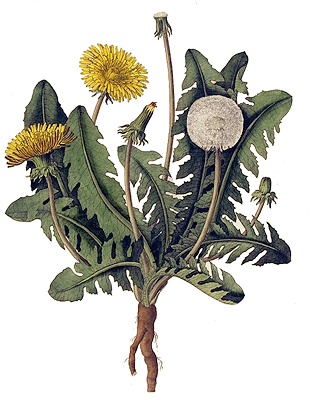
It’s spring and time to weed. Sow thistle is a delicious invader found throughout the continent.
EAT ME!
Sea

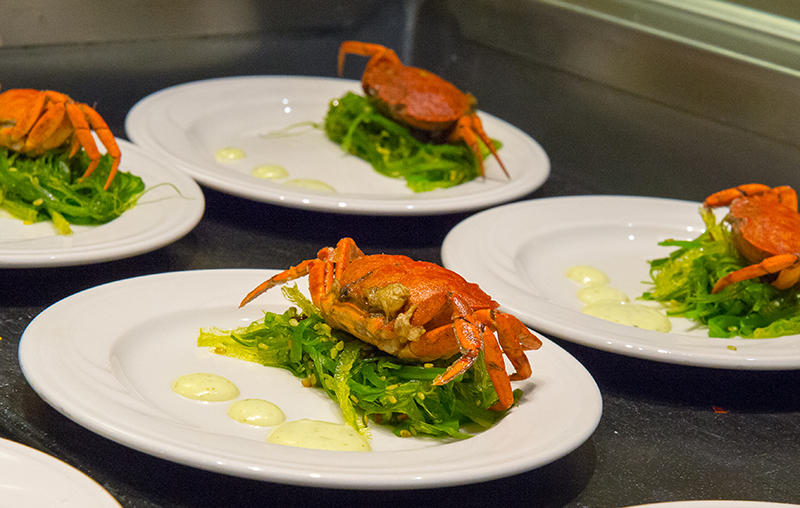
Asian Shore Crab
The first sighting of the Asian shore crab in the United States was at Townsend Inlet, Cape May County, New Jersey, in 1988. Though the source is unknown . . .
EAT ME!

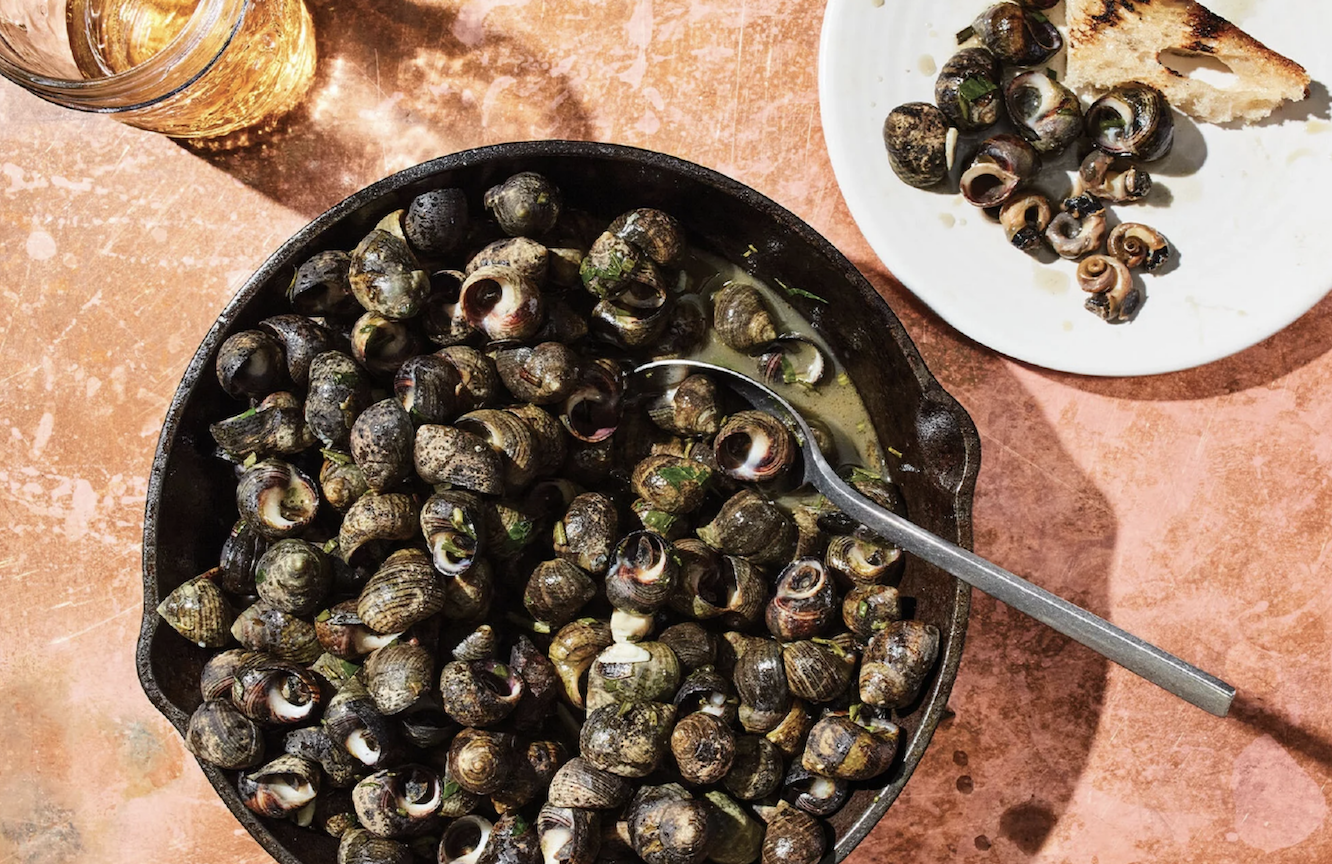
Periwinkle
The common periwinkle, which first appeared in New England in the 1860s, is now found along the coast wherever there’s hard substrate–rocks, riprap, broken concrete, or docks–from Labrador to . . .
EAT ME!

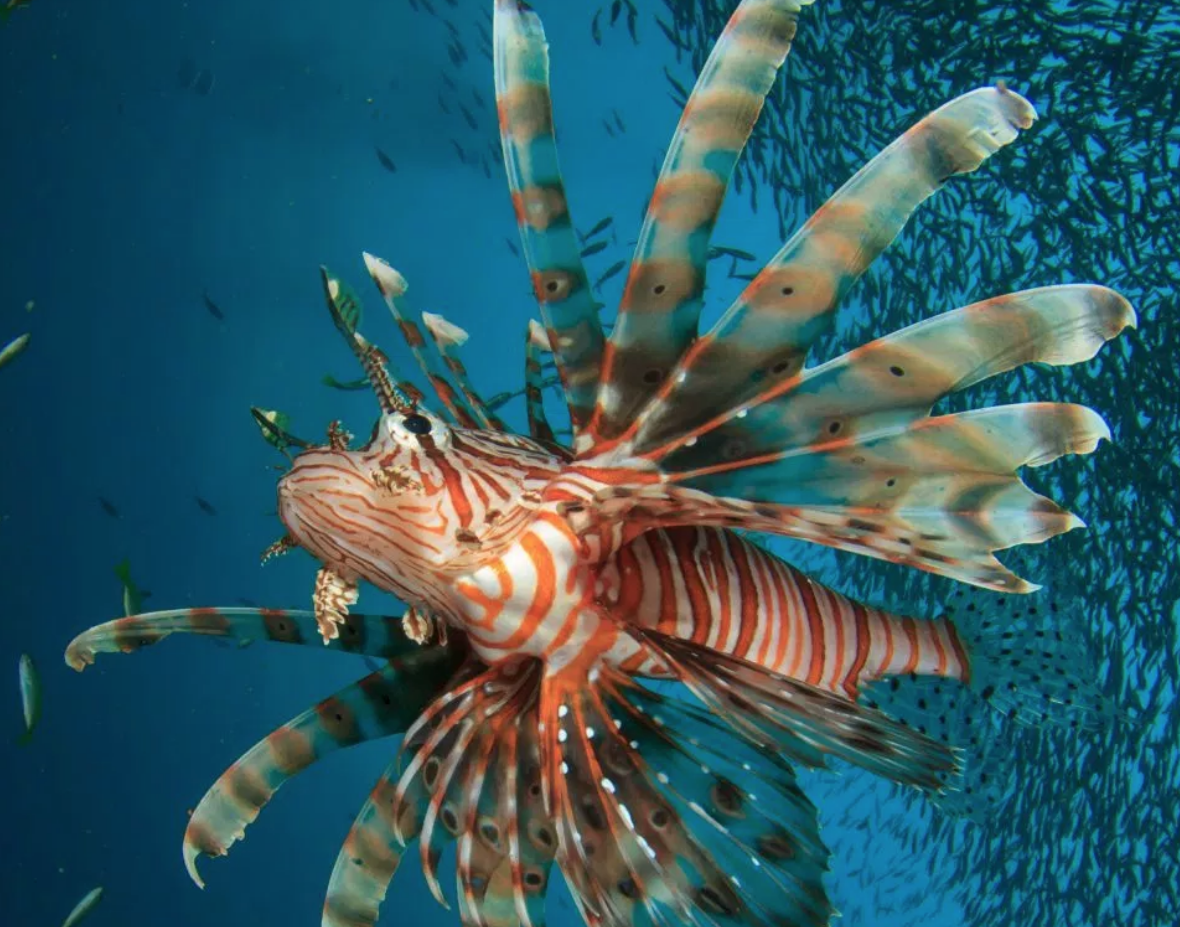
Lionfish
Some say it started in 1992 in Miami when Hurricane Andrew smashed an aquarium tank. Don’t blame the weather, others say; in the mid-nineties, disappointed yet softhearted hobbyists…
EAT ME!

Wakame
Undaria pinnatifida Native range: Japan Sea Invasive range: Southern California, San Francisco Bay, New Zealand, Australia, Europe, Argentina Habitat: Opportunistic seaweed, can be found on hard substrates including rocky reefs, pylons, buoys, boat hulls, and abalone and bivalve shells. Description: Golden brown seaweed, growing up to nine feet. Forms thick canopy. Reproductive sporophyll in […]
EAT ME!

Green Crab
Since the green crab was first recorded off southern Massachusetts in 1817, it has been hard to ignore. A few minutes of rock-flipping in Maine can turn up dozens of them, brandishing their claws as they retreat…
EAT ME!
Fresh

Armored Catfish
The armored catfish is abundant and destructive in Florida, Texas, and Mexico. Cast your nets for these flavorful natives of the Amazon. Scientific name: Two types have become established in North America: armadillo del rio, Hypostomus plecostomus, and sailfin catfishes in genus Pterygoplichthys Native range: Amazon River Basin Invasive range: Texas, Florida, and Hawaii; also […]
EAT ME!

Common Carp
For a bottom-feeder, what is the good life? The common carp isn’t very demanding: any body of water that’s sluggish and murky will do. If the water is clean, and you’ve got corn for bait, try one of these recipes.
EAT ME!

Watercress
Nasturtium officianale Native Range: Northern Africa, Europe, temperate Asia, and India Invasive Range: In USA: all lower 48 states, except North Dakota. Found in Alaska, Puerto Rico, and the Virgin Islands. Also southern Canada, Sub-Saharan Africa, South America, Australasia, and parts of tropical Asia. Habitat: Common along stream margins, ditches, and other areas with […]
EAT ME!

Crayfish
There are numerous invasive crayfish. We include details for the red swamp crayfish (Procambarus clarkii) and the rusty crayfish (Orenectes rusticus). The same recipes can be used for both species–and many other invasive crayfish. Red Swamp Crayfish Native range: Known as Louisiana crayfish, crawdad, and mudbug, Procambarus clarkii is native to the south central […]
EAT ME!

Nutria
Nutria, also known as coypu and river rat, is native to temperate and subtropical South America. It has been introduced to Europe, Asia, and Africa, mainly for fur farming. These voracious. . .
EAT ME!
Field Notes

“If you can’t beat them, eat them.” Why foraging for invasive plants is good for you
“We’re not trying to make it sustainable. The goal is eradication.” Read about eating invasives in the Boston Globe.
EAT ME!

Chef Serves Gourmet Meals with Unexpected Invasive Ingredients
“It suddenly occurred to me that we could flip the script and find a way to consume animals and plants where it is actually beneficial for the environment.” Read about it in The Cool Down
EAT ME!

Can We Eliminate Invasive Species by Eating Them?
On restaurant menus across New England, green crabs are showing up in everything from bouillabaisse and bisques to croquettes and crudo. Read about it in Salon.
EAT ME!

Radio Health Journal
Can adding invasives to your diet help the environment and your health? Listen to Radio Health Journal here.
EAT ME!

Qui veut manger des espèces invasives ?
Joe Roman chats with Camille Crosnier about eating invasives on France Inter. Listen here. In French.
EAT ME!
“They say that time changes things, but you actually have to change them yourself.”