

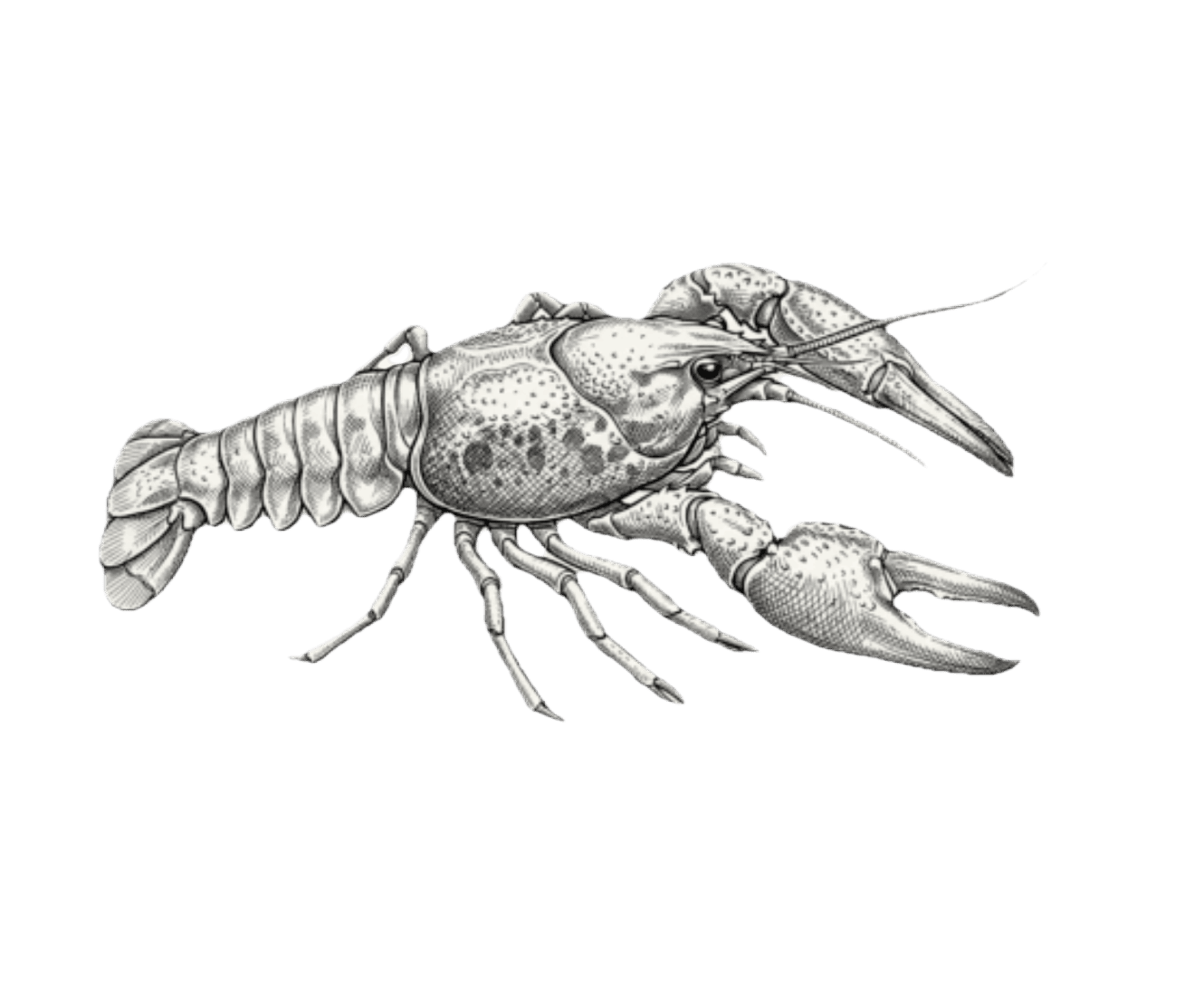


The rusty crayfish is native to the Ohio River basin, mainly in Ohio, Indiana, and Kentucky. A fairly large crayfish—about three to four inches long—it’s named for the rust-colored spot on each side of its shell.
In the twentieth century, people began moving the rusty crayfish far outside its native range. Anglers used it as live bait and dumped leftovers into lakes and streams. It was also sold to schools and the aquarium trade, then released. Commercial harvesters moved them, too. By the 1960s and 70s, the rusty crayfish turned up in the upper Midwest, especially Wisconsin, Minnesota, and Michigan, where it became notorious in northern lakes. A single female can store sperm and lay several hundred eggs. One stray crayfish could start a new population.
The rusty crayfish is considered invasive in several states including:
Upper Midwest and Great Lakes: Wisconsin, Minnesota, Michigan, Illinois, Iowa and Ontario.
Northeast: New York, Pennsylvania, New Jersey, Maryland, and every New England state except Rhode Island. It was first recorded in Vermont in the 1970s. It is now widespread in the Connecticut River and its tributaries, and dominant in the White River, and in several lakes in the state.
There are also isolated populations in New Mexico, Colorado, and Oregon.
Rusty crayfish can outcompete native crustaceans in many areas, stripping lake and stream bottoms of aquatic plants and destroying fish nursery habitat. They prey on fish eggs, snails and insects and can push native crayfish out of shelters. Once established, they’re nearly impossible to eliminate, but trapping can help reduce their numbers.
In Minnesota, Yusef Orest and other anglers are trapping rusty crayfish to eat and to sell. Orest, who started Crawdaddies in 2019, harvested more than 2000 pounds of crayfish in 2026. Catching them is easy he notes, though selling them can be challenging in Minnesota, where eating crayfish isn’t part local culture—yet.
As he told Marketplace, “It just takes a $15 minnow trap and a little bit of bait. Tie it to a line, throw it in the water, come back a day later, and you have a low-cost meal.”

