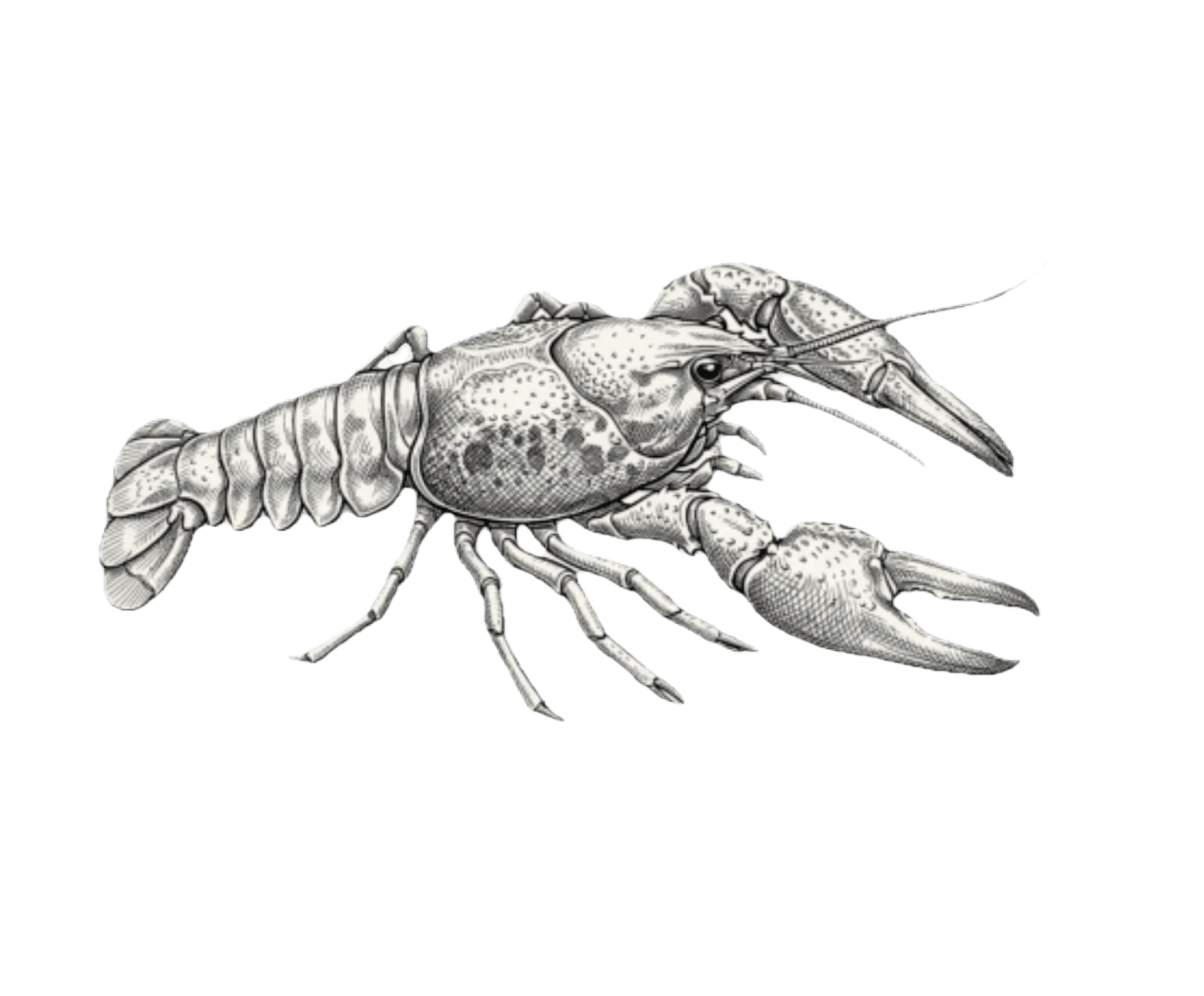
Baited traps are generally the best way to catch crayfish. In many areas, peak season is from March to July, though they can be caught any time of the year. The “pyramid trap,” constructed from wire formed into a three-sided form with three entrance funnels, is the industry standard of crayfish traps. Natural fish baits and formulated baits, which are some of the most costly aspects of production, are needed to lure crawfish into traps. Common fish used are Clupeid or “sardine-like” fishes, such as gizzard shad and Gulf menhaden. Common carp, buffalofish, herring, suckers, and catfish are also used. Traps can be placed in rows to facilitate harvesting by boat. Traps are usually emptied 24 or 48 hours after baiting.
Gretchen Hansen, who has worked to remove rusty crayfish from Wisconsin’s Sparkling Lake, told us that they used minnow traps with expanded openings to catch crayfish. (Using an oar to expand the opening works well.)