

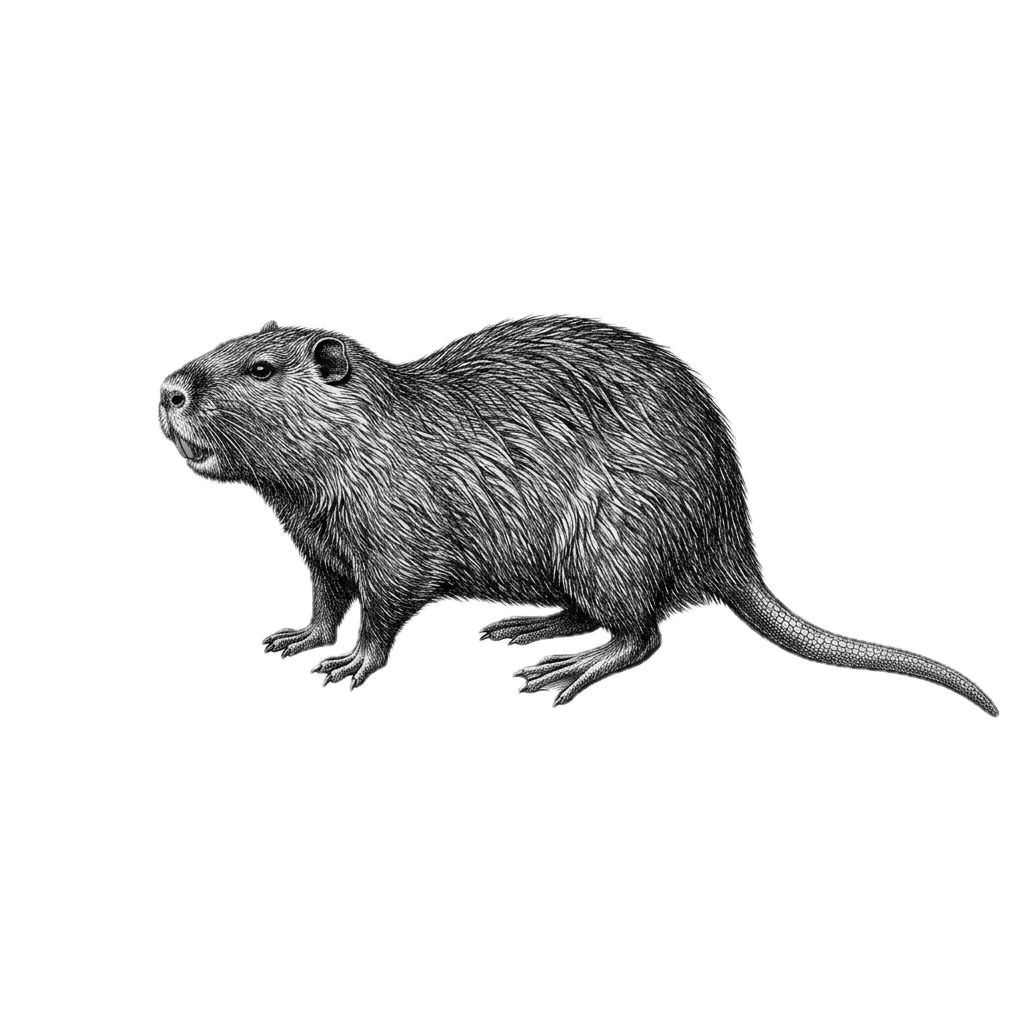


Nutria, also known as coypu and river rat, is native to temperate and subtropical South America. Introduced to Europe, Asia, and Africa, these voracious, herbivorous, semiaquatic rodents were brought to the US in 1889 for their fur. Smaller than a beaver, larger than a muskrat, they escaped into wetlands, chewing through whatever needed to be chewed through (rubber tires, wood siding) along the way.
By the 1950s, there were 20 million nutrias in Louisiana alone. Crops and levees were being damaged by their munching and digging. Should the state promote their fur—and protect their numbers—as a natural resource, or declare them a pest and get rid of them? The state got all that worked out, siding with the furriers, when, in the 1980s, the bottom fell out of the international fur market.
Lately, a few innovative designers have turned their attention to this furry invader. In 2009, Cree McCree founded Righteous Fur in New Orleans, creating a line of clothing from the soft brown fur and jewelry from the orange teeth.
In 2011, the Marsh Dog pet company started a line of dog treats to help conserve Louisiana’s wetlands. The coypu are sourced from the Barataria-Terrebonne Estuarine System in southern Louisiana, which is threatened by the rodents’ consumption of marsh plants.
We’ll probably be seeing more of the nutria. Climate change, accompanied by heavier rains in some areas, could extend their range north, since they would rather swim than walk.
But there have been successes. Detector dogs helped eradicate nutrias from the Chesapeake Bay after decades of damage to wetlands. At the USDA National Detector Dog Training Center, dogs have been trained to detect nutria via scat. It worked! Nutria were officially declared eradicated on September 16, 2022, in Maryland.
For more information on coypu biology, see The Louisiana Department of Wildlife and Fisheries website.
For more on the history of the coypu release see Shane K. Bernard’s “M’sieu Ned’s Rat? Reconsidering the Origin of Nutria in Louisiana: The E. A. McIlhenny Collection, Avery Island, Louisiana” in Louisiana History.


